This month I started a new chapter – one that feels like stepping into the future, while at the same time, very much like coming home.
When I was 14, I started flying airplanes. By 21 I was a flight instructor, and working as an Industrial Engineer at UPS. I traveled around the US to various hubs in Denver, Chicago, and Seattle to work directly with aircraft mechanics. The engineering work I was doing there focused on improving their daily work. I observed their workflows to understand their constraints and figured out how I could make their jobs easier. I got to learn what made their work difficult and see firsthand how the improvements I’d design made a difference in their day to day.
I was building things that changed how people operate, and I valued it deeply. I’ve been drawn to that kind of work ever since.
I carried that instinct forward when I worked at Bakken & Bæck. The projects I worked on – a startup delivering household goods in reusable packaging, an app that made it easy for non-technical folks to automate devices in their homes according to the weather, a platform to give you more control over selling your house – removed real friction, for real people.
During COVID, I joined Pitch building presentation software. While we were all cooped up and working from home, I focused on how to help people communicate visually in an increasingly remote world. At Raycast I optimized developer workflows, led our AI work, and measured muscle memory gains.
But along the way, I realized I was building tools for people building tools. At a time when the wider world seemed to face increasing challenges, I felt I was leaving real problems to sit unsolved, and I missed working on something tangible.
So for the last few months, I took some time away – a short sabbatical to think about what I wanted to do next. I spent time researching, experimenting with some new ideas (some of which I built out and might share soon) and talking to a lot of people. Conversations ranging from cybersecurity in the age of AI, to commercial greenhouse gardening, to maintaining and evolving “taste” (again, in the age of AI).
One of these conversations had me chatting with Tomaz Stolfa – CEO and Co-Founder of Sunrise Robotics – and a former colleague from my time at Pitch. We talked about industrial manufacturing, Europe’s aging workforce in this space, and Sunrise’s belief that automation could be done differently. Namely, by putting people first. Sunrise’s core mission is bold and clear: to augment humanity through intelligent robotics.
Augment, not replace.
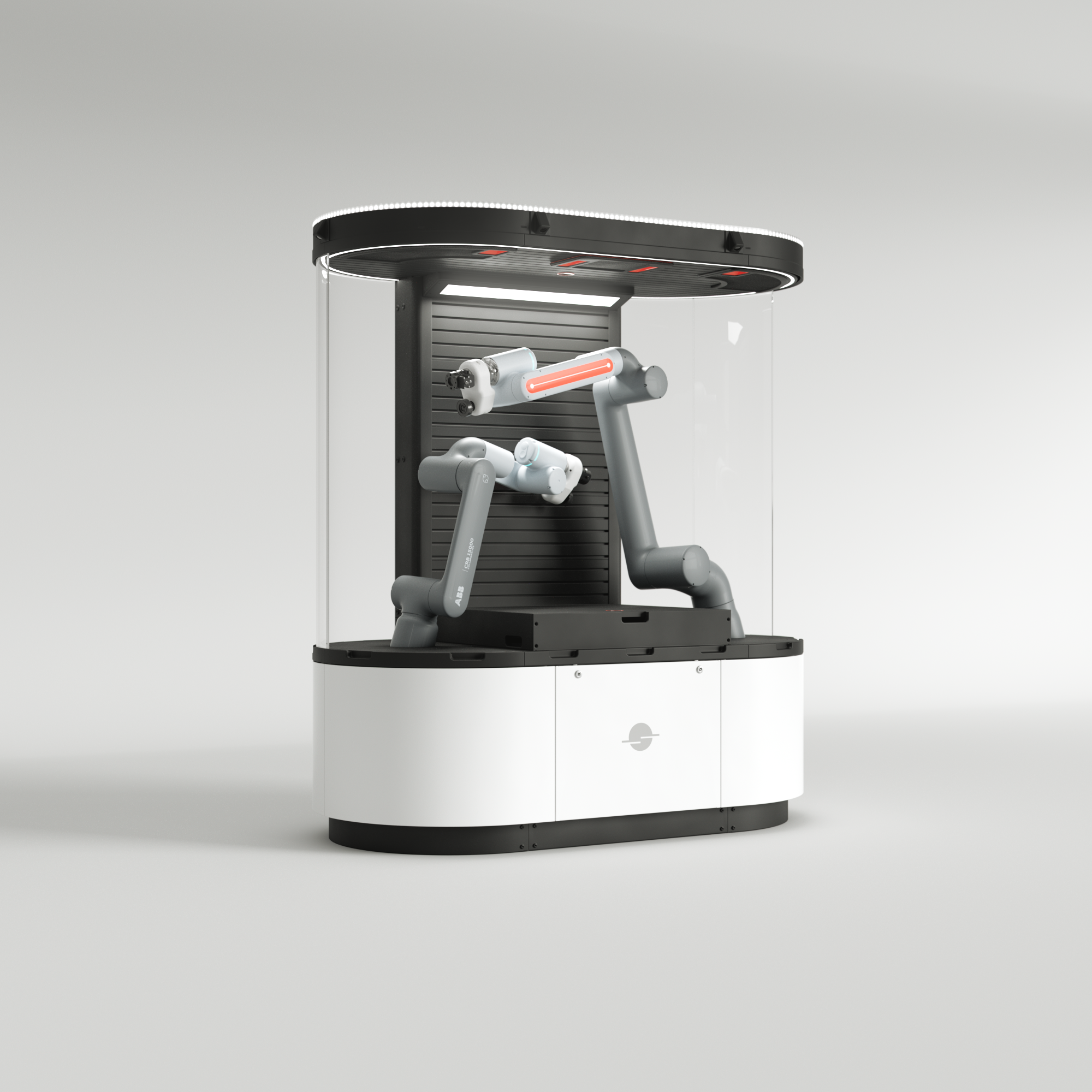
I, like I believe most people are, am hesitant about the idea of intelligent robotics (and the hype around it). There’s a very human reaction to robots replacing jobs that’s only exacerbated by the thought of layering AI into the mix. And, while “augmenting humanity” could skew towards marketing pitch, it is in fact why I’ve decided to join Sunrise.
I’ll be heading up a new discipline we’re calling Cell Experience. It’s the layer where robotic “cells” meet real people on the factory floor, and the goal is ambitious: to set the standard for what good human ↔ machine experience should be. I’m asking: how do we build automation that works for humans, something people work with, not around?
In this, I’ll be visiting our customers across Europe – working with folks in the field to understand their workflows, once again, and shape the experience of what it looks, sounds, and feels like to be working with our robots day to day. These are real people with real challenges that form the backbone of European manufacturing and now it’s our job to build for them, so they can build for everyone else.
It feels like a huge challenge – like stepping into the future, while at the same time, very much like coming home.